How to Tell If Your Roof Has Hail Damage From the Ground
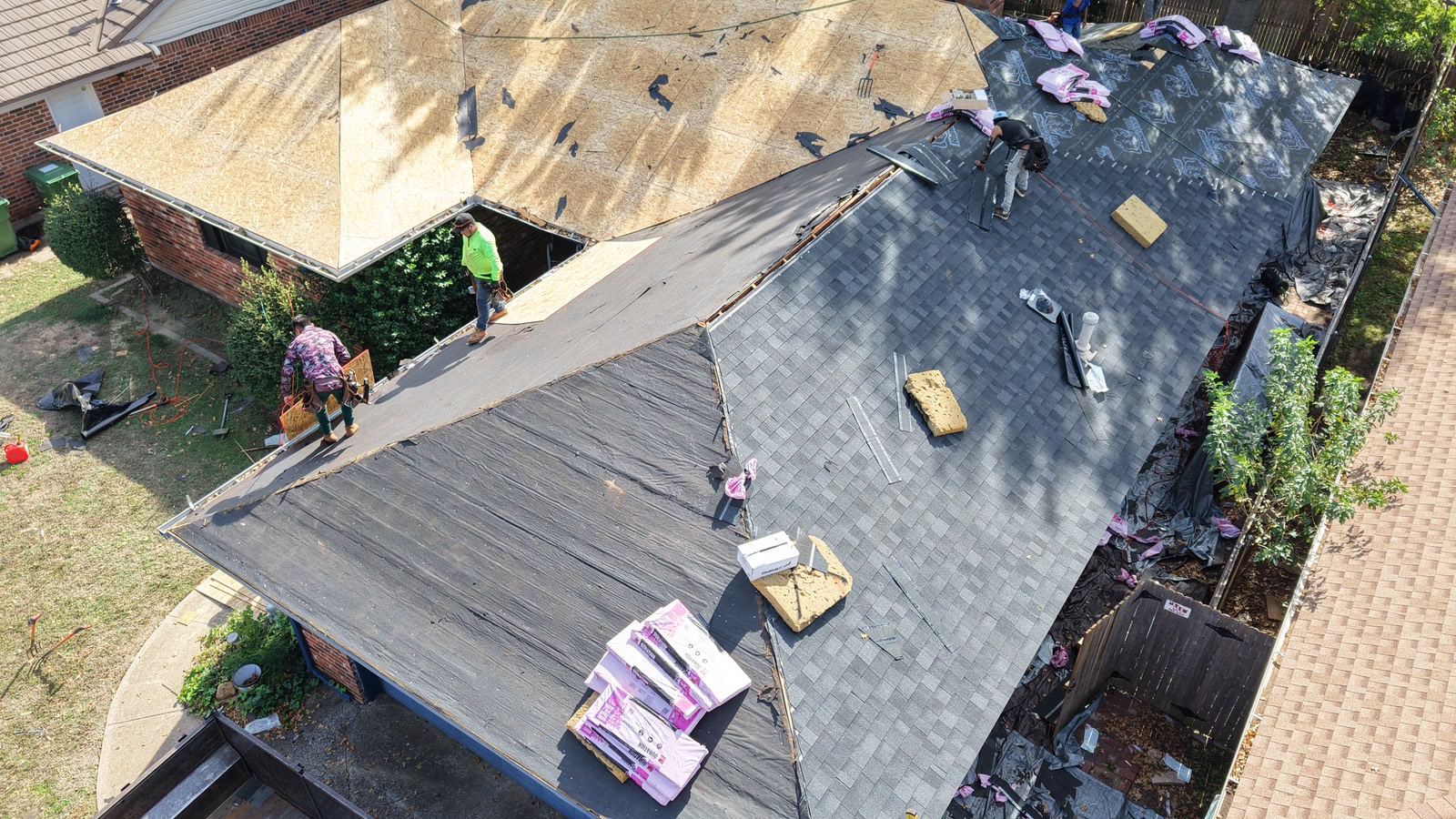
You can tell if your roof has hail damage by checking the things around the house from the ground, then having a roofer look at the shingles up close. Dents in gutters, downspouts, metal flashing and AC fins are good signs that hail fell. A hail report near your address adds context, but only a hands-on inspection confirms damage to the shingles.
Found dented gutters or bent AC fins after a storm? Read about storm damage repair for homes, or call (918) 212-4720 to set up a free on-site estimate with Black Crown Construction.
What are the signs of hail damage you can see from the ground?
The clearest signs of hail damage from the ground are dents and marks on metal and other surfaces around the house. Roofers call this collateral damage. The Insurance Institute for Business & Home Safety (IBHS) hail damage guide points to dents in metal flashing, dents in A/C unit fins and spatter marks as good indicators that hail fell.
Walk around the house and check:
- Gutters and downspouts: dents along the front edge, or round dings on the downspouts.
- The AC unit: bent or dented fins on the outdoor unit.
- Flashing, vents and trim: any metal you can see from the yard.
- Everything else outside: IBHS notes hail can also damage siding, windows, fences, lawn furniture and vehicles.
Spatter is a clue, not damage. IBHS explains that spatter happens when hail knocks oxidation or dirt off metal surfaces. Take dated photos of what you find, with a coin in the frame for scale.
What looks like hail damage but isn't?
Many marks that look like hail on a shingle roof come from something else. IBHS notes that installation marks, man-made damage and normal weathering can all be mistaken for hail hits. Common look-alikes include:
- Blisters and manufacturer defects
- General granule loss, which IBHS calls common on shingle edges
- Mechanical marks, such as scuffs from tools or foot traffic
Grit at the downspout outlets can come from normal shingle aging, so on its own it doesn't point to hail. Real hail damage falls in a random pattern, according to IBHS, and a bruise can usually be felt at the impact point. Feeling for that bruise means touching the shingle, so leave that part to a roofer.
Why shouldn't you climb on the roof to look for hail damage?
A ground check plus a roofer's inspection gives you everything you need, so stay off the roof and off ladders. Shingles can be slick after a storm, and a ladder gives a poor view of the surface anyway. A roofer also knows where to look first. IBHS lists ridge caps among the most hail-vulnerable parts of a shingle roof, and those are best judged up close. From indoors, you can watch ceilings and the attic for new stains after the next rain.
Was there hail at my address in Tulsa or Oklahoma City?
You can see whether hail was reported near a Tulsa-area or Oklahoma City address on the Storm Prediction Center's storm reports page, a free public page. The Storm Prediction Center, the national office that compiles these reports, is based in Norman, Oklahoma. Each report gives a location near a named town, plus the county, state, latitude and longitude. There is no street address lookup, so scan the Oklahoma rows for towns near your neighborhood.
A few tips for reading the reports:
- Hail sizes are in hundredths of an inch, so 175 means 1.75 inches.
- Times are listed in UTC, not Central time.
- You can type in a past date to pull up an earlier day's reports.
- The comments often say where a report came from, such as a storm spotter, local media or a social media video.
The Storm Prediction Center notes that all reports are considered preliminary, so treat them as a starting point rather than a full record. Reports come from people who saw the hail, so an empty list doesn't mean nothing fell on your street. A report near your house is neither proof of damage nor proof that your roof is fine. For local follow-up, see the post on whether to inspect after Tulsa hail or the checklist after the Oklahoma City hail storm.
When should a roofer inspect your roof after hail?
A roofer's inspection makes sense when your ground check shows hail hit the house or a hail report sits close to your neighborhood. Signs worth a professional look:
- Dented gutters, downspouts, flashing or AC fins
- Cracked or chipped siding or window trim
- New ceiling or attic stains after rain
On an inspection, a roofer feels shingles for bruises, looks at ridge caps, vents and flashing, and separates hail hits from blisters and wear. Ask for dated photos and a written summary. IBHS notes that hail can shorten the life of a roof, which is one reason to have a close look even without a leak. Questions about your homeowner's policy go to your insurance agent.
IBHS also advises homeowners to beware of unsolicited offers to inspect or repair a roof. Before anyone climbs up, ask for the contractor's Oklahoma roofing registration number and proof of insurance. Oklahoma registers roofing contractors through the Construction Industries Board, so you can check the number there. This guide on checking an Oklahoma roofing company's history walks through the public records. If the roof does need replacing, IBHS recommends a covering with a Class 4 rating under the UL 2218 or FM 4473 standard.
Getting a second set of eyes on the shingles
When dents, bent fins or a nearby hail report leave you unsure about the shingles, an up-close look settles what the ground can't. We offer homes in the Tulsa metro and Oklahoma City a free on-site estimate. Call (918) 212-4720 or describe the hail marks you found.
OK Roofing Registration #80008030
Frequently asked questions
Can hail damage a roof without causing a leak?
Yes. IBHS notes that hail can damage roof coverings and shorten the life of a roof. Damage that has not leaked yet can still matter, which is why a roofer checks shingles by hand instead of waiting for a ceiling stain. If dents on gutters or AC fins show hail hit the house, a professional look is reasonable.
Does a hail report near my house mean my roof is damaged?
No. A nearby Storm Prediction Center report shows that hail was reported in the area, and the center considers all reports preliminary. It does not tell you the size of hail that fell on your house or the condition of your shingles. Only a close inspection of the roof itself, done by a roofer, confirms damage.
How do I read hail sizes on the Storm Prediction Center reports?
Hail sizes are listed in hundredths of an inch, so a size of 175 means 1.75 inches. Each report shows a location near a town, the county, state, latitude and longitude rather than a street address, and times appear in UTC instead of Central time, so compare the location with your neighborhood.