What Counts as Severe Hail? The NWS 1-Inch Rule Explained
Hail is considered severe when it is at least 1 inch in diameter, the size the National Weather Service uses to call a thunderstorm severe. The NWS raised that line from 0.75 inch to 1.00 inch in 2010. The label describes the storm, not what happened to any particular roof.
If you noticed dented gutters, torn screens or loose granules after a hailstorm, Black Crown Construction can check the roof with a free on-site estimate; see the storm damage repair service page or call (918) 212-4720.
What size hail is considered severe?
The National Weather Service calls hail severe when the stones reach at least 1 inch in diameter. The Storm Prediction Center's FAQ defines a severe thunderstorm as one with hail at least 1 inch, wind gusts of 58 mph or greater, or a tornado. Any one of those is enough. A second tier, called significant severe, starts at larger sizes.
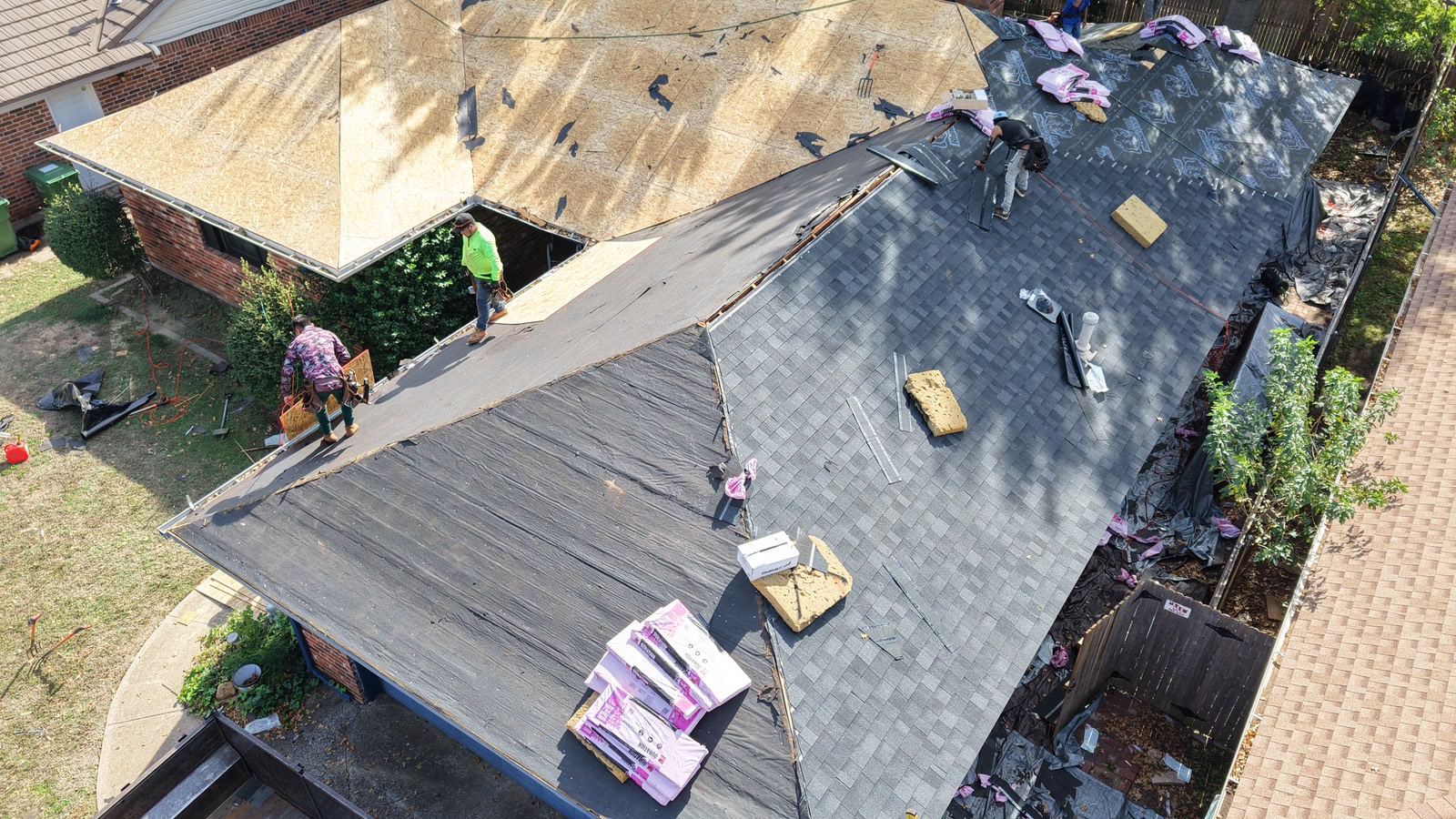
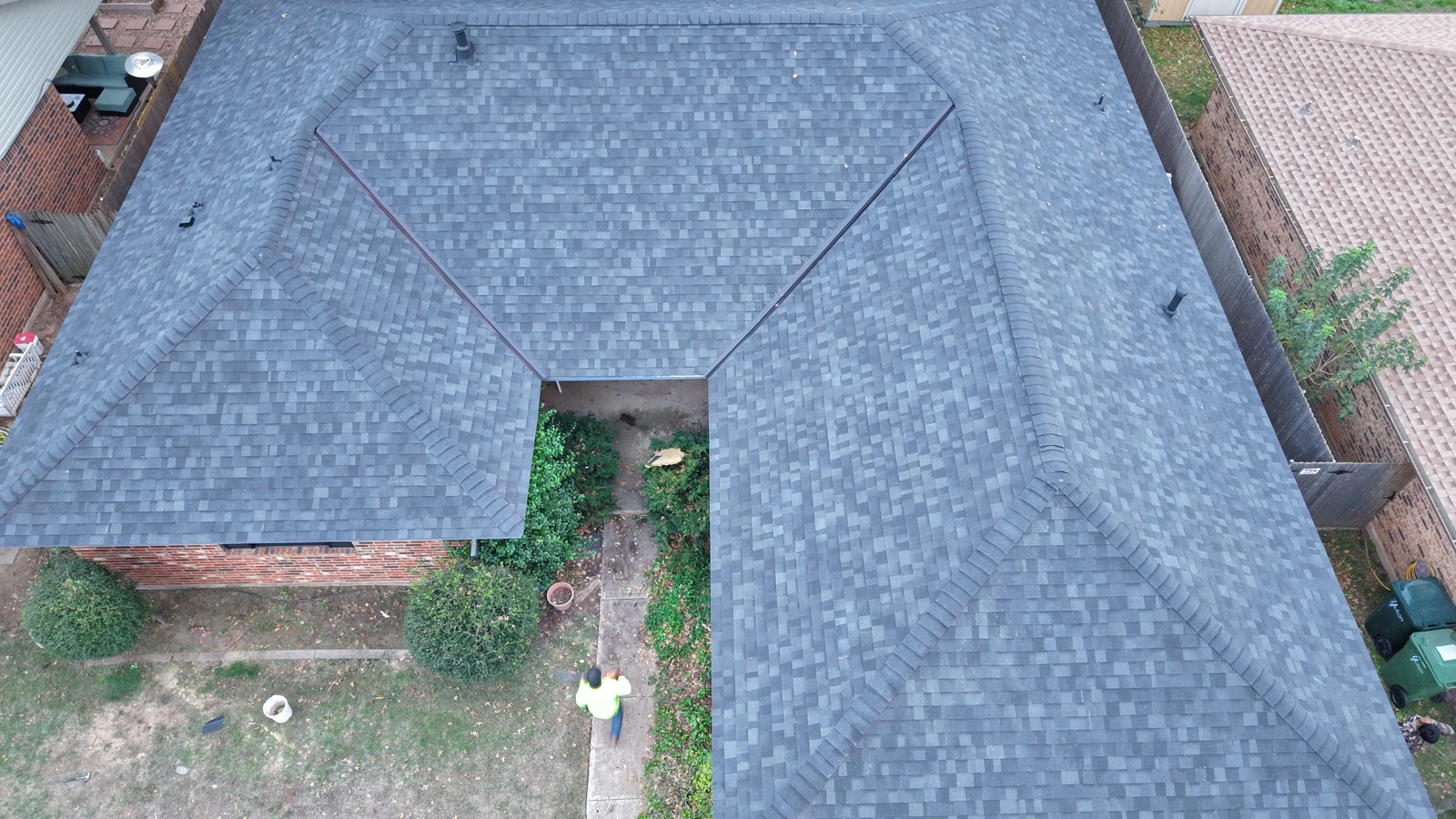
Yukon re-roof, October 2026: aerial view of a crew shingling a hip roof over black underlayment, with shingle bundles spread on the slope.
| Category | Hail | Wind gusts | Tornado |
|---|---|---|---|
| Severe | At least 1 inch | 58 mph or greater | Any tornado |
| Significant severe | At least 2 inches | 75 mph or greater | EF2 or greater damage |
Lightning and heavy rain don't make a storm severe under the NWS definition. The same 1-inch line shows up in forecasts. A Severe Thunderstorm Watch outlines an area where hail 1 inch or larger and/or damaging winds are expected during a two to eight hour period.
When did severe hail change from 0.75 to 1 inch?
The severe hail minimum moved from 0.75 inch to 1.00 inch in 2010, according to the Storm Prediction Center's data page. The SPC still keeps the 0.75-inch reports in its files. So check which line a hail map uses before you compare years. A map built on the old line counts smaller stones.
How do you read hail sizes on SPC storm reports?
Storm Prediction Center reports list hail size in hundredths of an inch, so a size of 175 means 1.75 inches. The SPC's daily storm reports page explains this and notes that all reports are considered preliminary. Here is how to read one for your area:
- Find the right date. The SPC's reporting day runs from 1200 UTC to 1159 UTC the next day. A storm in the early-morning hours can land on the previous date's page.
- Read the size as hundredths. A listing of 175 is 1.75 inches.
- Look at the location. Each report marks one spot where someone saw or measured hail. A single report is not the full path of the storm.
- Treat the list as a draft. The SPC explains that its list likely misses some reports, and an event with no local storm report won't appear. Official, final data goes into the NCEI Storm Events Database, which takes a few months to compile.
Does severe hail mean your roof is damaged?
A hail report labeled severe does not tell you whether a given roof was damaged, and a smaller size on a report doesn't settle the question either. The severe label is about the storm as a whole. When a roofer judges hail marks, the details that matter are ones a report can't show:
- The age and condition of the shingles
- The roofing material and the metal parts on it, such as vents and flashing
- Which direction the storm came from
- Whether your street sat under the heaviest part of the storm
The report closest to your home is a clue, not an answer. Whether any damage is covered is up to your insurance company, so take coverage questions to your agent or insurer.
How does hail reporting work in Oklahoma?
Hail reporting in Oklahoma runs through the same national system as everywhere else, and its forecast office sits in Norman: that is the Storm Prediction Center's address on its storm reports page. According to the SPC's FAQ, the SPC issues all Severe Thunderstorm and Tornado Watches, while warnings come from local NWS offices. The daily report list is built from local storm reports that those local offices send out.
For homes in the Tulsa metro and Oklahoma City, that means a few practical things:
- A watch from Norman is a forecast that hail 1 inch or larger may happen somewhere in the area, not a report that it fell on your street.
- For a recent storm, your local NWS office is the place to ask, because final records take a few months.
- The SPC's data page notes that more severe weather gets reported where more people live, and its FAQ says the daily list likely misses some reports. So a blank spot on the report map doesn't mean hail missed your street.
Your own ground-level clues count for more than the map.
What signs mean a roofer should take a look?
A roofer should look at the roof when ground-level clues show hail hit the house hard enough to leave marks. Check from the yard, from windows and from inside only. Anything at roof height is a job for a professional.
- Dents or dings on gutters, downspouts, the mailbox or A/C fins
- Shingle granules piled at downspout outlets
- Torn window screens or chipped paint on trim and siding
- Fresh spatter marks on fences, decks or the driveway
- Missing pieces or dark spots on shingles you can see from the ground
- New water stains on ceilings or damp spots in the attic
Take dated photos of what you find, write down the storm date, and keep receipts for any tarping or temporary repairs. For more clues you can spot safely, read how to tell if your roof has hail damage from the ground. For what a roofer looks for up close, see what roofers check after hail.
If a walk around the house after a storm turned up dents, granules or a new ceiling stain, a close look at the roof can sort hail marks from ordinary wear. Black Crown Construction will come out to homes in the Tulsa metro and Oklahoma City to give a free on-site estimate. Call (918) 212-4720 or share the storm date and what you noticed.
OK Roofing Registration #80008030
Frequently asked questions
Is hail smaller than 1 inch a problem for a roof?
The size alone can't answer that. The 1-inch line only decides whether the National Weather Service calls a storm severe. The 1-inch line describes the storm, not a roof; ground-level clues such as dents on gutters or granules at downspouts tell you more than the label. If you spot clues like those, a roofer can check the roof up close.
Why do some hail maps show more severe hail than others?
The National Weather Service raised the severe hail minimum from 0.75 inch to 1.00 inch in 2010, and the Storm Prediction Center still keeps the smaller reports in its files. A map using the old line includes more storms. Reports also cluster where more people live, since more people are around to send them in. Compare maps only when they use the same size line.
Where can I find final, official hail records for a storm date?
The Storm Prediction Center's daily lists are preliminary. For official, final records, the SPC points people to the NCEI Storm Events Database, which takes a few months to compile. For a recent storm, your local National Weather Service office is the place to ask about reports that are not final yet.