Roof Damage After a Tornado Nearby: What to Look For
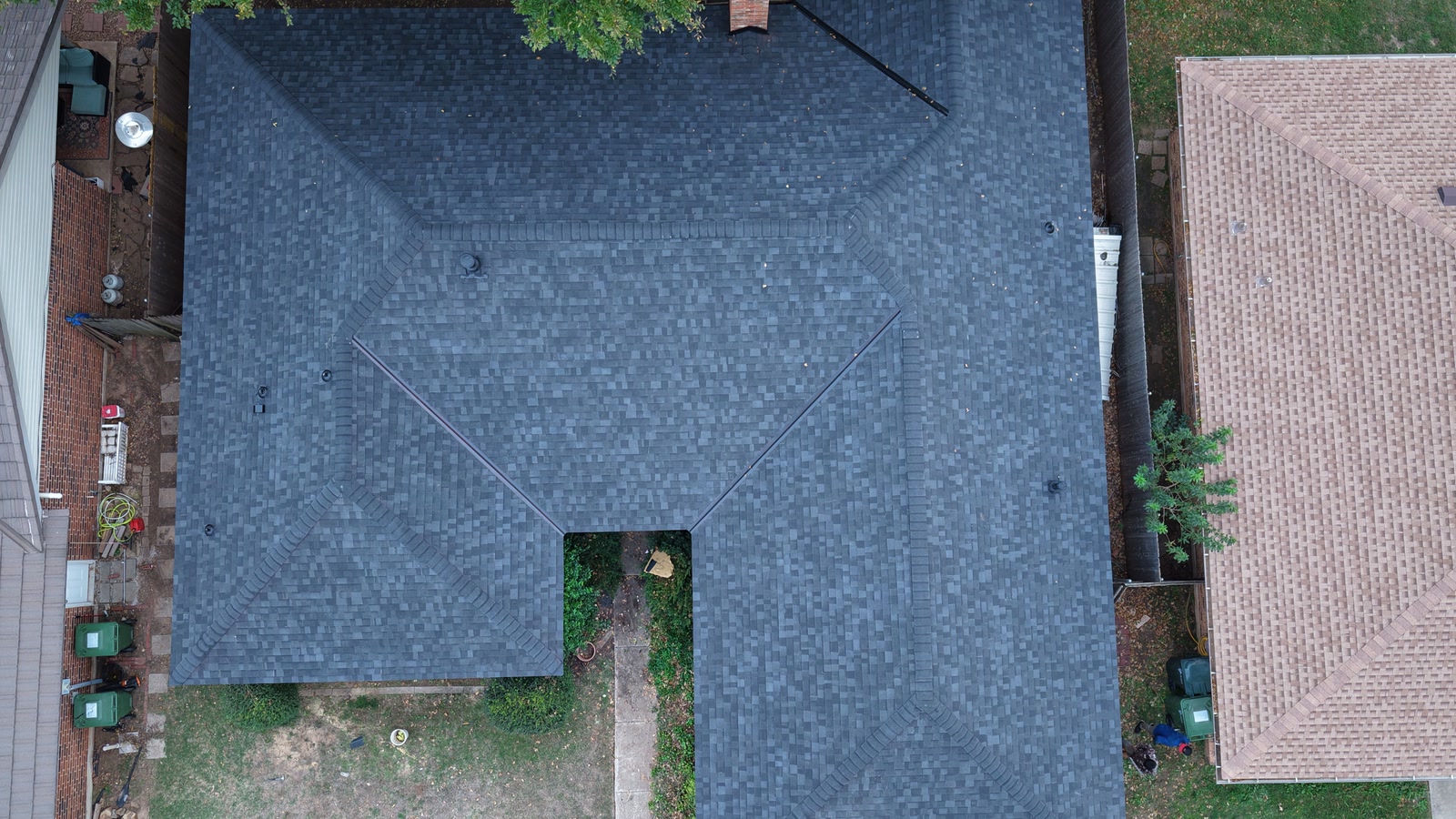
Roof damage after a tornado nearby can be easy to miss: lifted or creased shingles, missing ridge caps, small punctures from flying debris, bent flashing and gutters pulled loose. Some of it shows from the yard, a window or the attic. Take dated photos of anything you find, and have a roofer check the parts you can't see from the ground.
If your walk around the house turned up a creased shingle, a missing ridge cap or a sagging gutter, Black Crown Construction can take a closer look with a free on-site estimate through our storm damage repair service.
Why check your roof if the tornado missed your house?
Checking your roof after a tornado passes nearby makes sense because homes near the track can be close to its winds and flying debris. The Oklahoma Department of Emergency Management notes that a tornado's path is usually very narrow, though it can range up to a half-mile or more in the most extreme cases.
A home a few streets over may miss the direct hit, so it is worth a careful look. When you check, pay attention to the eaves, the rakes and the ridge. Wind can lift a shingle, break the adhesive strip that holds it down, and let it settle back looking almost normal.
Also look for debris that landed on the roof. Branches, fence boards and loose items from nearby yards can crack or puncture shingles.
What tornado roof damage signs can you spot from the ground?
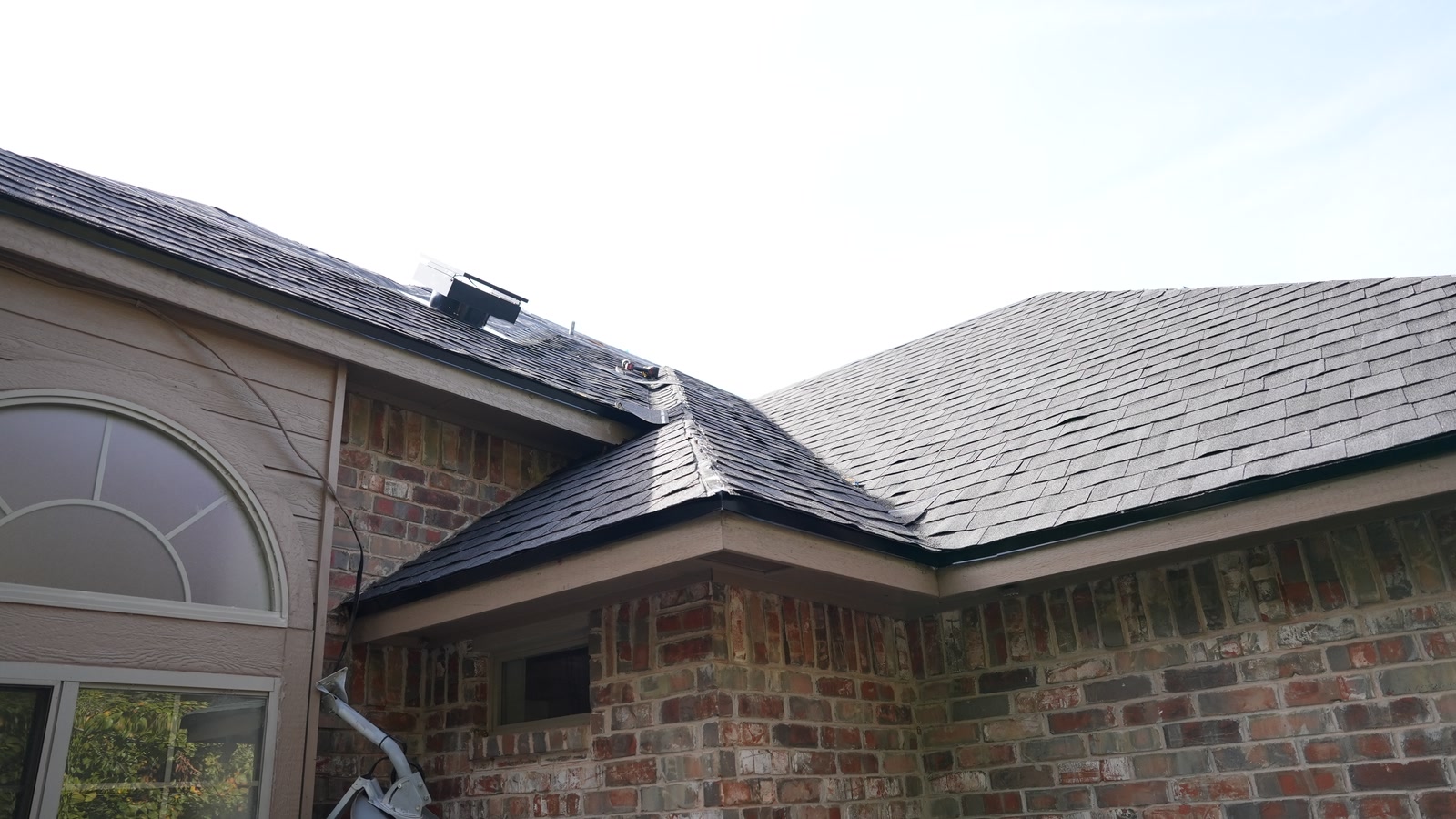
The tornado roof damage signs you can spot from the ground are usually small: shingles that look out of place, gaps along the ridge, and metal pieces that are bent or loose. Walk around the whole house and look at each roof slope. Binoculars help.
- Lifted or creased shingles. Look for tabs that don't lie flat, or a faint line across a shingle where wind folded it back.
- Missing or shifted ridge caps. Look along the peak and the hips.
- Shingle pieces on the ground. Check the yard, flower beds and gutters for broken bits.
- Punctures or gouges. Look for dark spots, cracks or debris still sitting on the roof.
- Bent flashing. Check the metal around the chimney, vents and where the roof meets a wall.
- Loose gutters. Watch for gutters pulled away from the fascia, sagging runs or downspouts hanging free.
- Soffit and siding. Torn soffit panels or cracked siding on one side of the house are worth noting too.
Then check from inside. In the attic, look for daylight through the roof deck, damp insulation or wet wood. In the rooms below, watch the ceilings for new stains after the next rain.
Keep every check on the ground or indoors. Don't climb onto the roof or use a ladder to get a closer look. Ready.gov advises staying clear of fallen power lines or broken utility lines after a tornado. It also recommends thick-soled shoes, long pants and work gloves during cleanup.
What should you photograph after the storm?
Photograph everything you notice before you clean up, with the date showing, so you have a clear record of what the storm left. A simple file now saves guesswork later.
- Take wide photos of each side of the house from the yard.
- Zoom in on any lifted shingle, missing cap, bent vent or loose gutter.
- Photograph debris in the yard and on the roof before you move it.
- Capture attic stains, wet insulation and ceiling spots.
- Write down the storm date, what you noticed, and when you noticed it.
- Keep receipts for any temporary repairs a contractor makes.
Store the photos and notes in one folder on your phone or computer.
Insurance questions belong with your insurance company. The Oklahoma Insurance Department advises homeowners whose property is damaged to contact their insurance agents or insurance companies. Your insurer decides what your policy covers, so ask your agent about coverage.
What's different about wind damage on Oklahoma roofs?
Oklahoma roofs see tornado season every year. The Oklahoma Department of Emergency Management reports that the state averages more than 50 tornadoes every year, most often from March to May, though they can happen anytime.
For your roof, that means it's sensible to have anything loose or out of place looked at before spring.
After storms, roofers may knock on doors. Ask any roofer for their Oklahoma roofing registration number and check it with the Construction Industries Board. Ask for proof of insurance and a written estimate. The guide to checking a roofing company's history walks through the public records.
When should a roofer take a look?
A roofer should take a look when your ground check turns up anything out of place, or when the storm passed close and parts of the roof are hidden from view. Missing shingles are easy to spot. Broken seals and small punctures often are not.
Signs worth a call:
- A shingle, ridge cap or piece of flashing missing or out of place
- Debris that landed on the roof
- A gutter that is bent or pulling away
- A new ceiling stain, damp attic insulation or daylight through the deck
What a roofer checks on an inspection:
- Whether shingle seals let go and tabs are creased
- Nails that have backed up through the shingles
- Flashing at chimneys, vents and walls
- Punctures and soft spots in the deck
- Gutters, soffit and fascia
- Attic ventilation and signs of water
If shingles have already blown off, the steps in what to do first when shingles blow off apply. If the inspection finds widespread wind damage, the conversation may move from spot repairs to whether a full roof replacement makes more sense.
A ground check can tell you something changed up there, but not how far the wind got under the shingles. Black Crown Construction will come out to homes in the Tulsa metro and Oklahoma City for a free on-site estimate on anything you spotted. Call (918) 212-4720 or send a note about what you found around the house.
OK Roofing Registration #80008030
Frequently asked questions
Can a tornado damage a roof without blowing shingles off?
Yes. Strong wind can lift shingles, break the adhesive strip that holds them down and crease the tabs, then let them settle back looking nearly normal. A roofer can check the seals and creases up close, which is not something to try from a ladder yourself.
Is it safe to look over my own roof after a tornado?
Look from the yard, from windows and from inside the attic, never from a ladder or the roof itself. Binoculars help you see the ridge and edges. Keep away from any downed power lines, and wear sturdy shoes, long pants and work gloves while you pick up debris.
How can I tell if a door-knocking roofer is legitimate?
Ask for their Oklahoma roofing registration number and look it up with the Construction Industries Board. Ask for proof of insurance and a written estimate that spells out the work. Read reviews on more than one site, and take your time comparing estimates before you sign anything.