Can You Replace a Roof in Winter in Oklahoma?
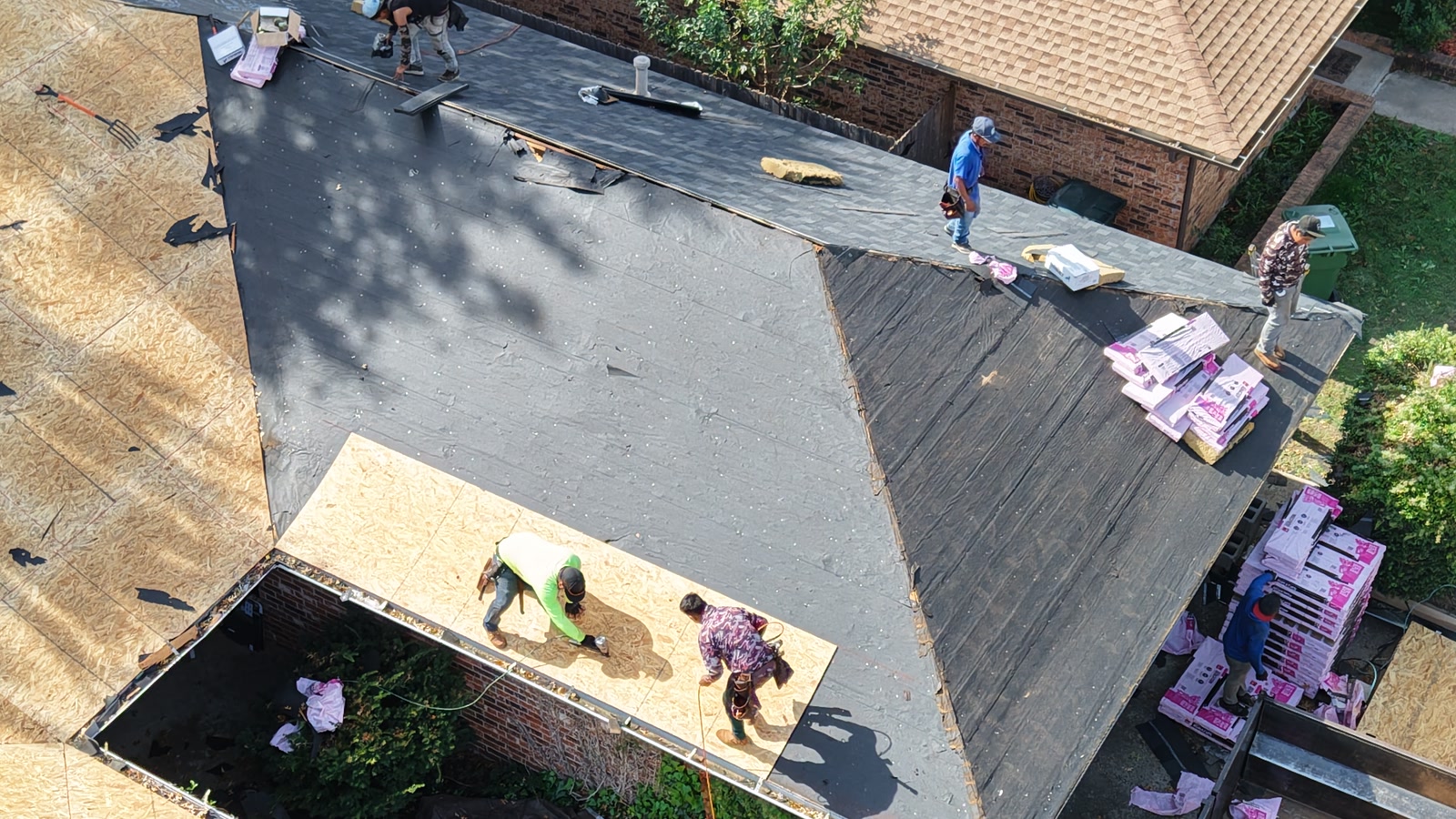
Yes, you can replace a roof in winter in Oklahoma when the crew follows cold-weather practices and picks suitable days. Cold weather calls for extra care: shingles kept warm before they go on, hand-sealing when the sealant strips can't bond on their own, and no work on a deck with ice or frost. Winter storms and hard cold snaps can push a job back, and a few roofs are better left for spring.
Weighing a winter re-roof against a spring one? Black Crown Construction can go over the timing with you during a free on-site estimate for a full roof replacement.
Can you replace a roof in cold weather?
An asphalt shingle roof can be replaced in cold weather when the crew changes how it stores, handles and seals the shingles. The Asphalt Roofing Manufacturers Association's cold-weather recommendations, published March 28, 2022, note that asphalt shingles have been used successfully in cold climates. The same bulletin lays out the steps for winter work.
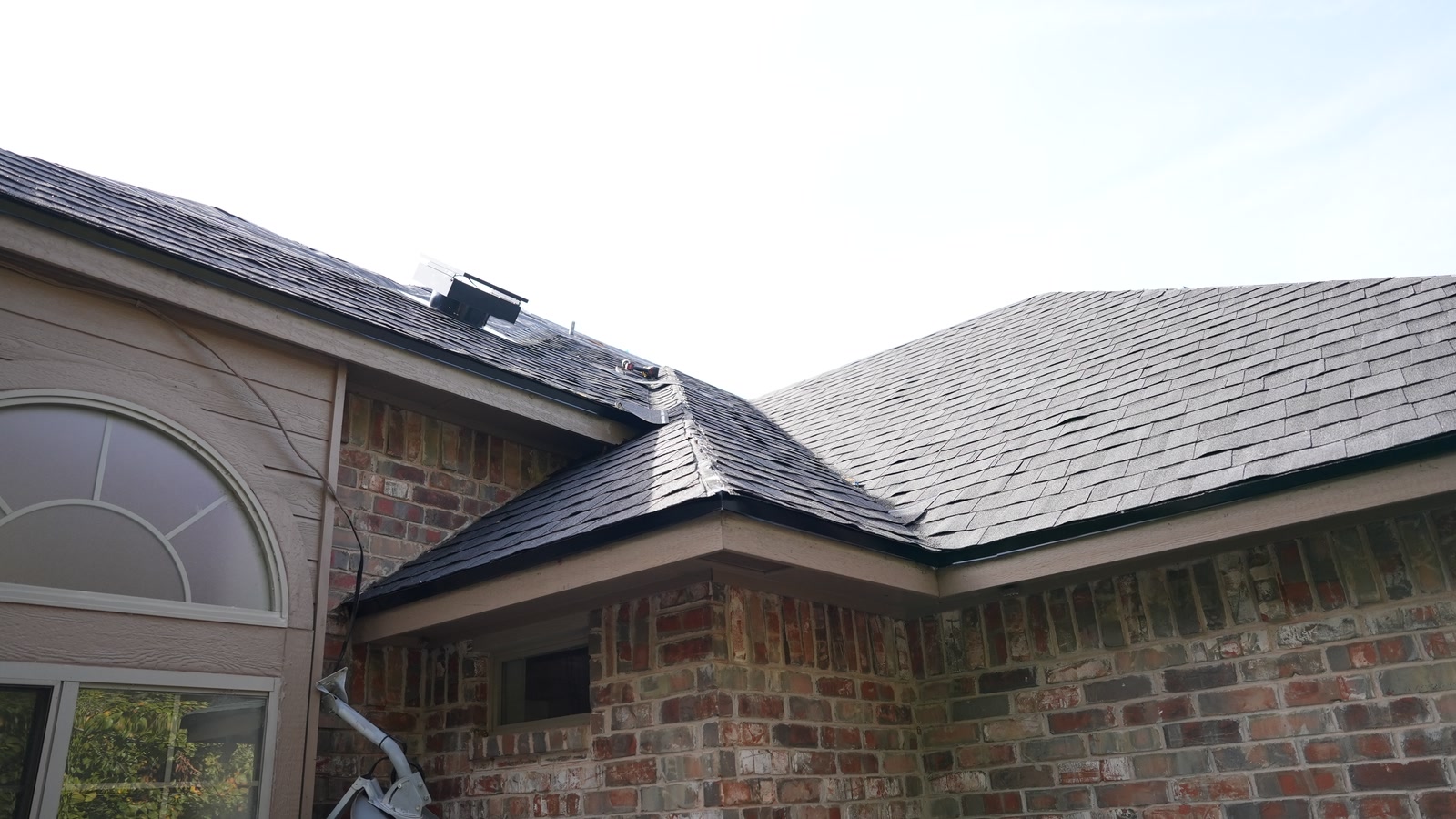
The tear-off and deck repairs are much the same in winter, but the deck has to be free of ice and frost before work continues. On an Edmond re-roof in October 2026, Black Crown's crew found an older blue underlayment layer where the old shingles came off. The crew shingled the home's steep brick gables with the bundles staged on the slope. A tear-off can turn up old layers or worn decking that can't be seen from the yard, so expect any estimate to explain how deck repairs are handled.
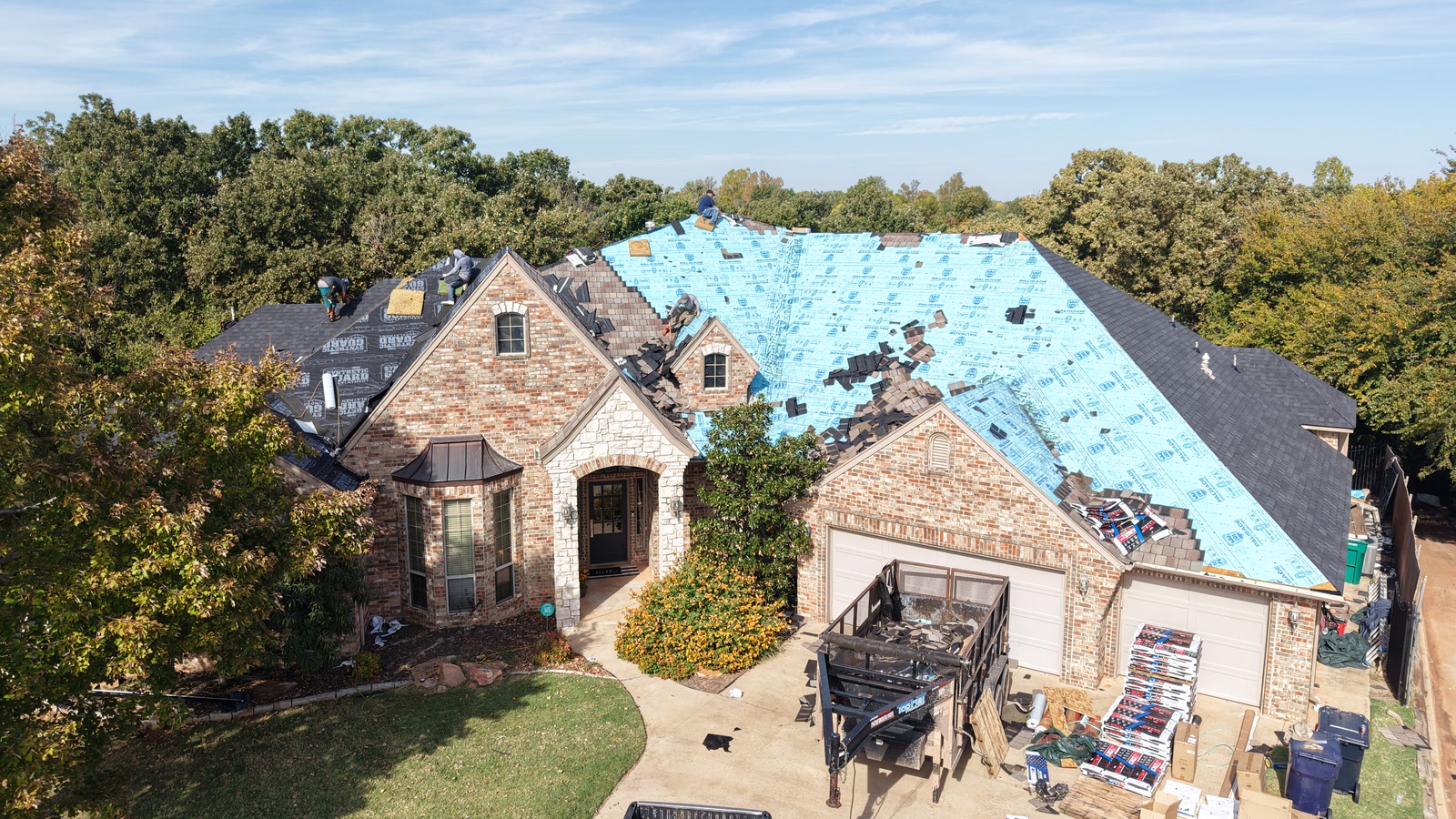
Edmond re-roof, October 2026: roof mid-replacement, blue underlayment on one side, new black underlayment and shingles on the other
What do roofers do differently when installing shingles in winter?
Roofers installing shingles in winter mostly protect the shingles from the cold. The ARMA recommendations come down to a few habits:
- Keep bundles warm. Shingles get less flexible as the temperature drops and can crack. ARMA suggests storing them indoors before they go on.
- Handle them gently. Cold bundles shouldn't be bent, thrown or dropped. They also hold the shape they were stacked on, so each shingle has to lie flat before it is nailed.
- Take care at hips, ridges and valleys. Those spots bend the shingle. ARMA suggests considering open metal valleys in cold weather, since woven and closed-cut valleys require bending.
- Hand-seal when needed. Most shingles have a heat-activated sealant strip that bonds the courses once the sun warms them. In very cold weather, shingles can be hand-sealed with an approved roofing cement for better protection against wind blow-off.
- Wait out ice and frost. ARMA advises waiting until the roof surface is free of ice and frost.
- Follow the shingle maker's instructions. ARMA notes that most building codes require following them, and they set the cold-temperature directions for each product.
Good questions for any roofer bidding a winter job: Where are the shingles stored before install? When would you hand-seal? What happens on a frosty morning?
How cold do Oklahoma winters get for roofing?
Days when the high stays below freezing are uncommon in Tulsa and Oklahoma City, even in January. NOAA's monthly climate normals show Tulsa averages 3.5 January days when the high stays below freezing, and Oklahoma City averages 2.9. Winter in both metros still brings many days with highs above freezing; whether a given day works depends on the shingle maker's temperature directions and the roof surface.
Winter storms can also affect scheduling. The Oklahoma Department of Emergency Management notes that a winter storm can last a few hours or several days and can bring freezing rain, snow, ice and high winds. Plan for a winter start date to move if one of those storms rolls in.
What can delay a winter roof replacement?
A winter roof replacement can be held up by conditions on the roof surface as well as by the cold itself. Common holdups:
- Ice, frost or snow on the deck
- A winter storm in the forecast
- Rain or snow expected before the open deck can be covered
- Short daylight, which trims working hours
- Days colder than the shingle maker's instructions allow
A careful crew tears off only as much as it can cover with underlayment and shingles before the end of the workday. Ask the contractor to put the planned start window in writing and to explain how the house stays protected if the weather turns mid-job.
When does waiting for spring make sense?
Waiting for spring makes sense when the roof is aging but still keeping water out, so there's little reason to rush into cold weeks. A few other cases point the same way:
- Roofs with many hips, valleys and dormers. More bending means more chances for a cold shingle to crack.
- Plans to roof over existing shingles. ARMA warns that shingles laid over an uneven surface in cold weather can lock in that uneven look, even after warm weather returns. Whether a second layer is allowed at all is covered in Oklahoma's shingle layer rule explained.
- Flexible timing. If you can wait, you can pick dates that suit your household.
Waiting is a poor fit for an active leak or fresh storm damage. A targeted roof repair may be an option to address the leak until a full replacement fits the schedule.
What signs mean a roofer should look at your roof this winter?
A roofer should look at your roof when something you can see from the ground or from inside the house has changed. Check from the yard, a window or the attic, never from a ladder or the roof itself. ARMA notes that curved or buckled shingles break easily underfoot in frigid weather, and frost on a roof can be nearly invisible.
Signs worth a professional look:
- Missing, curled or cracked shingles seen from the ground
- Shingle granules piling up at the downspouts
- Water stains on ceilings or around chimneys and skylights
- Damp spots or daylight through the roof boards, seen from the attic with a flashlight
- A sagging ridge or roofline
On an inspection, a roofer checks the shingles, the flashing at walls, chimneys and vents, soft spots in the deck, and whether the attic is adequately ventilated, which ARMA lists among its cold-weather points. Dated photos of what you noticed help the roofer know where to start.
If a check from the ground turned up curled shingles or a new ceiling stain, or you're simply deciding between a winter job and a spring one, a close look at the deck, flashing and attic answers the question. Black Crown Construction can visit homes across the Tulsa metro and Oklahoma City for a free on-site estimate. Call (918) 212-4720 or share a few details about your roof to set up a visit.
OK Roofing Registration #80008030
Frequently asked questions
Is it cheaper to replace a roof in winter?
The price of a new roof comes from the roof itself: its size and pitch, the tear-off, any deck repairs, the materials and how easy the house is to reach. The season can affect scheduling, but the scope of the job stays the same. Get written estimates from more than one roofer and compare what each one includes line by line.
Will new shingles seal down properly in cold weather?
Most asphalt shingles use a heat-activated sealant strip that bonds once sun and warmth reach it, so sealing can take longer in winter. When it is very cold, an installer can seal shingles by hand using an approved roofing cement to help resist wind blow-off. Ask your roofer when they plan to hand-seal and follow the shingle maker's instructions.
Is it safe to check my own roof in winter?
Stay off the roof and off ladders. Frost and ice on shingles can be nearly invisible, and cold shingles that are curved or buckled can break underfoot. Look from the yard, from upstairs windows and from inside the attic with a flashlight, take dated photos of anything that looks off, and leave anything at roof height to a professional.